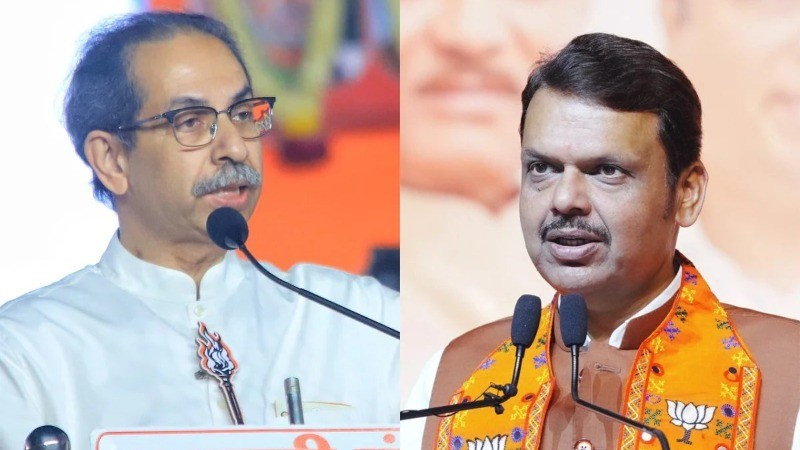

In Mumbai, development is not an abstract idea. It is measured in missed trains, dug-up roads, unfinished Metro stations and the time lost every day in traffic. As the Brihanmumbai Municipal Corporation elections approach, the city has once again become the stage for a familiar political confrontation: who actually delivers infrastructure, and who slows it down?
The debate has sharpened with the Mahayuti alliance and the Mahavikas Aghadi (MVA) trading claims over Mumbai’s recent past. For the ruling alliance, the argument is straightforward — large cities need speed, and Mumbai functions best under decisive leadership. For the opposition, development is framed around sustainability, consultation and long-term planning. But beneath the slogans lies a more practical concern for citizens: which political arrangement keeps the city moving.
Supporters of the Mahayuti often describe Mumbai as a city that responds to momentum. They argue that large-scale infrastructure — Metro corridors, highways, sea links — requires uninterrupted decision-making. In their view, political hesitation, coalition pressures and credit battles directly translate into delays that affect millions of commuters.
This argument draws heavily on the period between 2014 and 2019, when Devendra Fadnavis led the state government. During these years, projects that had spent years on paper moved into execution. Metro expansion accelerated, groundwork for the coastal road advanced, and construction began on the Mumbai Trans Harbour Link, later inaugurated as Atal Setu.
Those backing this phase describe it as a turning point, when approvals were faster and timelines clearer. They argue that the impact of that approach became most visible only later — when projects slowed or timelines shifted after political leadership changed.
The 2019–2022 period under Uddhav Thackeray and the Mahavikas Aghadi is viewed very differently depending on political alignment. Critics say the coalition structure shifted focus from execution to internal balance, with development decisions becoming politically sensitive.
The Metro 3 car shed controversy at Aarey Colony became the most visible flashpoint. Opponents argue that halting work at the original site was less about environmental concern and more about political repositioning. According to them, the move led to major cost escalations and delayed a crucial east–west transit corridor that could have eased pressure on Mumbai’s roads years earlier.
Beyond Metro projects, critics claim that welfare-linked and infrastructure schemes lost urgency during this phase. Issues such as road conditions, congestion and slow-moving civic works fed a broader perception that Mumbai’s development engine had lost momentum.
The COVID-19 lockdown period further intensified political fault lines. Mumbai faced enormous strain on healthcare systems, employment and transport. Rival parties accused the MVA leadership of administrative lapses and misplaced priorities, while allegations related to procurement and food supply contracts added to the controversy.
Supporters of the government at the time rejected these claims, pointing to the unprecedented nature of the crisis. However, for many residents, the period reinforced a sense of drift — that decision-making was reactive rather than anticipatory during one of the city’s most challenging phases.
After the 2022 change in government, with Eknath Shinde as Chief Minister and Devendra Fadnavis as Deputy Chief Minister, Mahayuti leaders claim stalled projects were rapidly reactivated. The opening of Atal Setu became a central symbol of this narrative, frequently cited as proof of administrative urgency.
Other developments followed. Sections of the coastal road opened, significantly reducing travel time between South Mumbai and the western suburbs. Metro lines began operations, slowly reshaping daily commute patterns. Even projects once criticised — such as the Mumbai–Ahmedabad bullet train — have regained momentum.
For Mahayuti supporters, these changes reinforce the idea that Mumbai progresses fastest under stable, single-direction leadership.
The Mahayuti’s return to power in the 2024 Assembly elections has strengthened its pitch for continuity. But control of the Brihanmumbai Municipal Corporation remains the bigger prize. Civic governance directly affects roads, drainage, transport integration and daily urban services — areas where delays are felt immediately.
Opposition parties seeking a comeback warn against what they describe as unchecked, speed-first development. Mahayuti leaders counter this by arguing that Mumbai cannot afford further pauses driven by political ego or internal bargaining.
As campaigning intensifies, the choice presented to voters is increasingly framed in stark terms: uninterrupted execution versus negotiated governance; momentum versus moderation.
For a city already stretched by population pressure and infrastructure demand, the underlying question is no longer ideological. It is practical. Can Mumbai afford another phase of uncertainty, or does it need a governance model that prioritises speed, scale and continuity above all else?